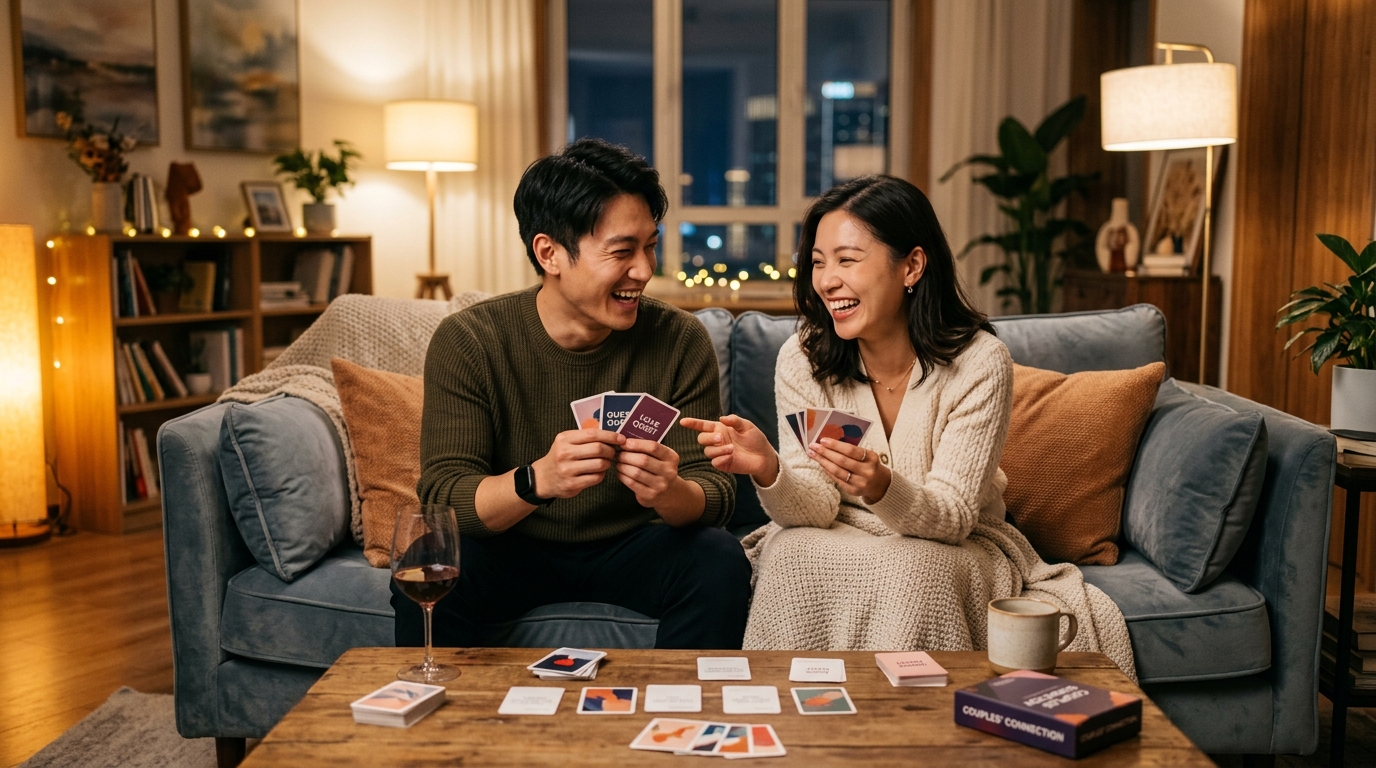
When two people stand at the altar, passion feels effortless. But as days turn into years—filled with mortgage payments, career ambitions, child-rearing, domestic chores, and endless grocery lists—many spouses find themselves asking a quiet, vulnerable question: How do we build sexual intimacy after years of marriage?
It is one of the most common, yet least discussed, evolutions in adult life. Relationship therapists refer to it as the "roommate transition"—a stage where two partners love each other deeply, respect each other completely, yet feel like polite business partners running a household rather than lovers sharing romantic magnetic chemistry.
The truth is that lasting sexual intimacy in a long-term marriage doesn't happen by accident, nor does it thrive on the automatic frenzy of new relationship energy. Instead, long-term erotic connection is a craft. When couples learn to combine emotional vulnerability, intentional novelty, and playful tools like Love Secret, physical intimacy can become richer, more fulfilling, and far more deeply satisfying than it was in their twenties.

Why Intimacy Changes Over Time: The Science of Long-Term Marriage
Before you can rekindle marital passion, it helps to understand why the physical spark changes in the first place. Marital psychology highlights three fundamental shifts that affect long-term couples:
- From Spontaneous to Responsive Desire: As sex therapist Dr. Emily Nagoski details in Come As You Are, early relationships are dominated by spontaneous desire (random sparks out of nowhere). In long-term partnerships, desire becomes predominantly responsive—it awakens in response to warmth, relaxation, playful touch, and emotional closeness rather than appearing out of thin air.
- The Paradox of Familiarity (Esther Perel): Renowned marital psychotherapist Esther Perel notes that love craves closeness, safety, and predictability, while erotic desire thrives on mystery, space, and novelty. When spouses know every habit and facial tick of their partner, mystery must be intentionally reintroduced.
- The Heavy Weight of Mental Load: You cannot feel sensual when your brain is actively calculating school carpool logistics, unanswered work emails, or the cost of repairing the roof. True bedroom arousal requires the nervous system to feel unburdened and safe.
- Body Changes and Insecurity: Over a decade or more, bodies change naturally. Fluctuating hormones, weight changes, postpartum shifts, and aging can lead to silent insecurities that cause one or both partners to retreat from being seen in vulnerable lighting.
💡 Gottman Institute Clinical Finding: The Emotional Bank Account
Drs. John and Julie Gottman discovered that for long-term married couples, bedroom passion is the outcome of non-sexual investments made throughout the day. Partners who make frequent "bids for connection"—such as checking in during the day, showing gratitude, and sharing private jokes—enjoy three times higher sexual satisfaction than those who only initiate touch in bed.
Download Love Secret: The Intimacy App for Married Couples
Want to break the roommate routine and make your marriage feel thrilling again? Download Love Secret free on the App Store for 1,000+ intimate question cards, romantic dice, and mystery date-night challenges designed specifically for couples.
7 Proven Steps to Build Sexual Intimacy After Years Together
Rebuilding erotic chemistry after years of marriage is not about forcing awkward encounters. It is about gently cultivating curiosity, setting down everyday stress, and re-engaging your partner as a multi-dimensional romantic being. Here are 7 transformative practices:
The Habit: Waiting until 11:00 PM when both partners are exhausted, drained by screens, and falling asleep to initiate physical touch.
The Fix: Shift intimacy to times of day when energy levels are actually alive: weekend mornings, lazy Sunday afternoons, or right before dinner while the house is quiet. Intimacy flourishes when both partners bring rested energy to the encounter.
The Habit: Only touching each other when physical escalation is expected, causing the more hesitant partner to avoid hugs and kisses.
The Fix: Practice affectionate touch that has zero agenda. Share a lingering 30-second embrace when coming home, massage each other's shoulders on the couch, or hold hands while walking. This dismantles defensive barriers and teaches your nervous system that physical contact is comforting.
The Habit: Assuming you already know everything there is to know about your spouse because you have lived together for a decade.
The Fix: People evolve. What excited your partner at age twenty-four may be very different from what thrills them today. Over coffee or a weekend drink, ask playful questions: "What is a fantasy or romantic scenario you've always found intriguing?" or "What kind of touch makes you feel most cherished right now?"

The Habit: Falling into the exact same predictable routine—the same takeout restaurant, the same streaming television show.
The Fix: Neuroscientists know that novelty releases dopamine, the exact chemical that fueled the intoxicating infatuation of early dating. Visit a new neighborhood, take a dance or cooking lesson, or play a couples game. Experiencing the unfamiliar side-by-side reignites romantic chemistry.
The Habit: Running out of things to talk about other than work stress, groceries, and kids.
The Fix: Structured intimacy games like Love Secret act as a natural social buffer. By letting an app prompt playful, deep, or slightly daring questions, neither partner feels "on the spot," allowing genuine laughter, flirting, and vulnerability to bubble up naturally.
The Habit: Allowing laundry baskets, children's toys, laptops, and glowing smartphones to clutter the primary bedroom.
The Fix: Reclaim the bedroom as a sacred, adult-only retreat. Invest in comfortable bedding, warm ambient lamps or candles, play soft acoustic music, and establish a firm rule that screens stay outside the bedroom overnight.
The Habit: Treating intimacy as a high-speed sprint to a finish line, which breeds spectatoring and performance anxiety.
The Fix: Slow everything down. Focus on sensory touch, slow kissing, breathing in sync, and laughter. When the pressure to achieve a specific outcome is removed, physical pleasure naturally expands.

Reignite Marital Chemistry with Love Secret
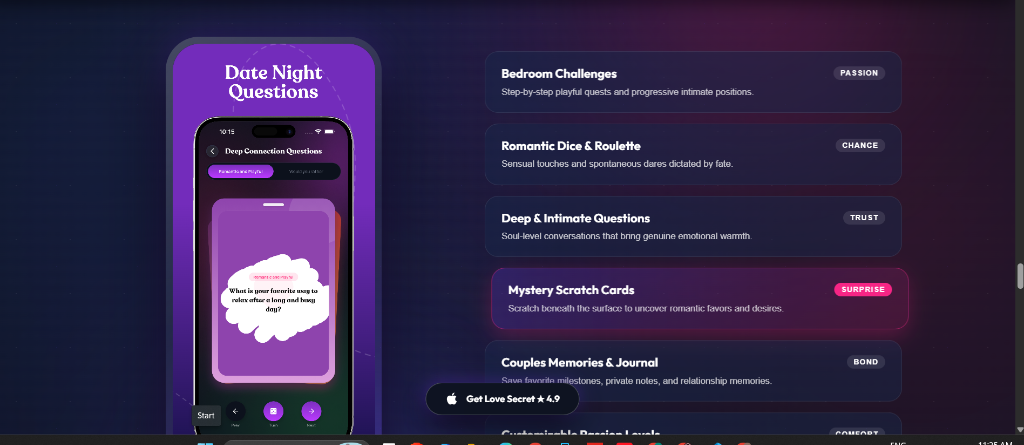
Break free from the roommate trap tonight. Love Secret gives married couples hundreds of playful conversation cards, romantic dice for affectionate touch, and mystery scratch challenges on iOS.
Why Love Secret is the Ultimate Intimacy Tool for Long-Term Spouses
For couples who have been married for five, ten, or twenty years, initiating new romantic habits can sometimes feel intimidating or stiff. Love Secret was intentionally designed to make intimacy effortless, pressure-free, and profoundly fun:
- 1,000+ Tailored Conversation Starters: From nostalgic questions about your early dates to deep emotional reflections on personal dreams and gratitude, these prompts bring back the late-night pillow talk you used to cherish.
- Romantic Dice & Touch Roulette: Takes the hesitation out of physical touch by randomizing gentle sensual gestures—like a 60-second neck massage, gentle cheek caresses, or warm slow dances in the kitchen.
- Mystery Date-Night Scratch Cards: Hidden scratch-off cards that reveal spontaneous, creative challenges you can complete together, infusing essential dopamine-boosting novelty into your weekly schedule.
- Zero Pressure, 100% Consensual: Every card and game mode features a seamless skip button, ensuring both spouses explore connection completely at their own speed with total mutual comfort.
Frequently Asked Questions (FAQ)
Is it normal for sexual intimacy to decline after years of marriage?
Yes, it is completely normal and biologically expected. Early relationship frenzy is powered by hormonal spikes (dopamine and phenylethylamine) that naturally level off after 2 to 3 years. Long-term marital intimacy shifts to responsive desire, which requires intentional emotional connection, novelty, and relaxation.
How can we stop feeling like roommates in our marriage?
Start by establishing non-negotiable weekly date nights, ending the habit of only talking about logistics, and re-introducing daily non-demand physical affection (6-second hugs and holding hands). Using conversation apps like Love Secret also injects laughter, curiosity, and flirting back into daily interactions.
What if one spouse has a higher desire than the other?
Desire discrepancy is present in over 80% of long-term marriages. Instead of framing it as a "high vs. low" battle, understand that the partner with lower desire likely experiences responsive desire. Focus on cultivating the "accelerators" (relaxation, emotional safety, romantic dates) and eliminating the "brakes" (stress, bedtime fatigue, domestic overwhelm).
How does the Love Secret app help married couples rebuild intimacy?
Love Secret serves as a playful, pressure-free bridge. It removes the awkwardness of wondering what to say or how to initiate by providing curated question decks, romantic dice for affectionate touch, and mystery scratch challenges that make date night exciting and connective.
How often should long-term married couples be intimate?
There is no universal quota. Research from relationship psychologist Amy Muise found that couples who are intimate once a week report the highest levels of relationship happiness, with additional frequency yielding similar satisfaction. Focus on quality, emotional presence, and mutual enjoyment rather than arbitrary numbers.
Download Our Games for Couples Connection
Ready to fall in love with your spouse all over again? Download Love Secret free on the App Store to explore intimate question decks, romantic dice, and fun date-night games crafted for couples.
Want to Play These Questions Tonight?
Love Secret features hundreds of deep conversation cards, randomized dice, and scratch-off challenges designed for every couple.